A Mixed Reality Experience
The Cuban Freedom Flights
From 1965 to 1973, these flights became a lifeline for an estimated 300,000 refugees, marking it as the largest airborne refugee operation in American history.
The Concept
This interactive project acts as a digital time machine, allowing users to explore three immersive experiences about the Cuban Freedom Flights: History, Photo Galleries, and Stories.
The aim is to entertain, educate, and tell meaningful stories by blending the strengths of technology and hand-crafted art to create an interactive and immersive animated short film.
Key Design Question
How can mixed reality be used to tell Meaningful Stories that bridge the worlds of traditional and interactive media?
Project Walkthrough
Key Interactions
The experience utilizes hand tracking and controller inputs to create a tactile connection to the past.
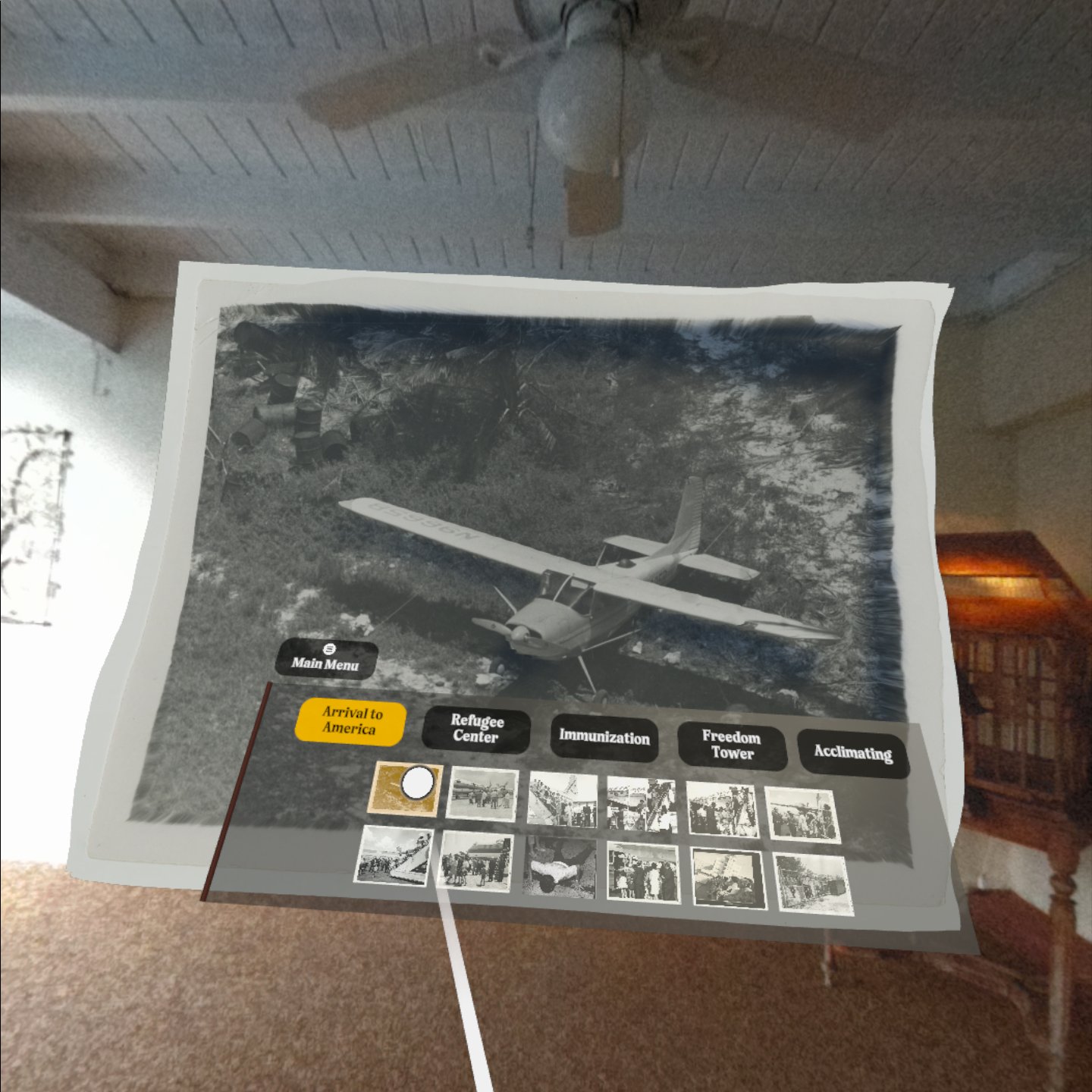
Users can view stunning galleries featuring authentic photographs from the era. Images are enhanced with depth map layers to add previously unseen dimension.
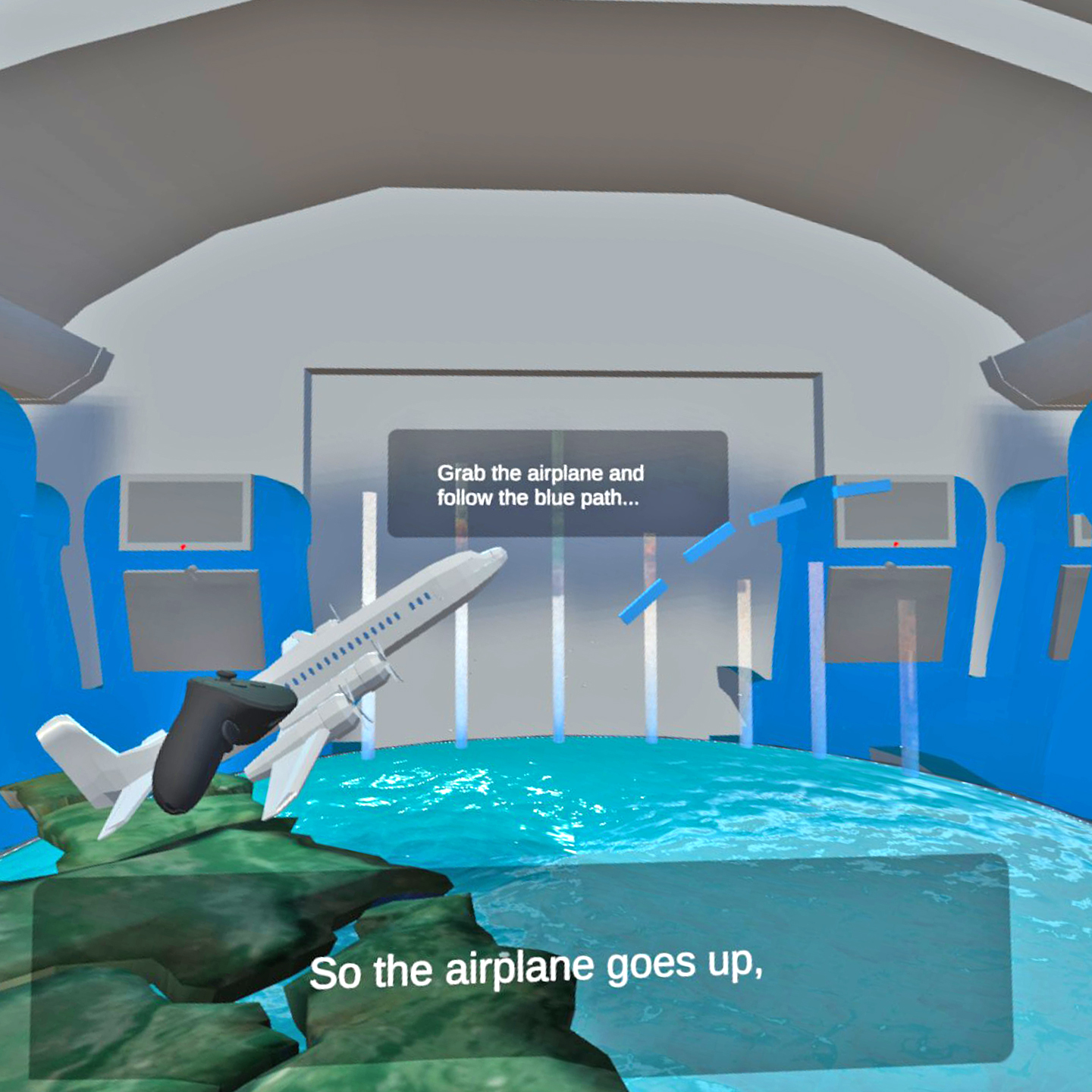
Progress is triggered by user actions, such as "Grab the airplane and follow the blue path." This gamifies the learning process.
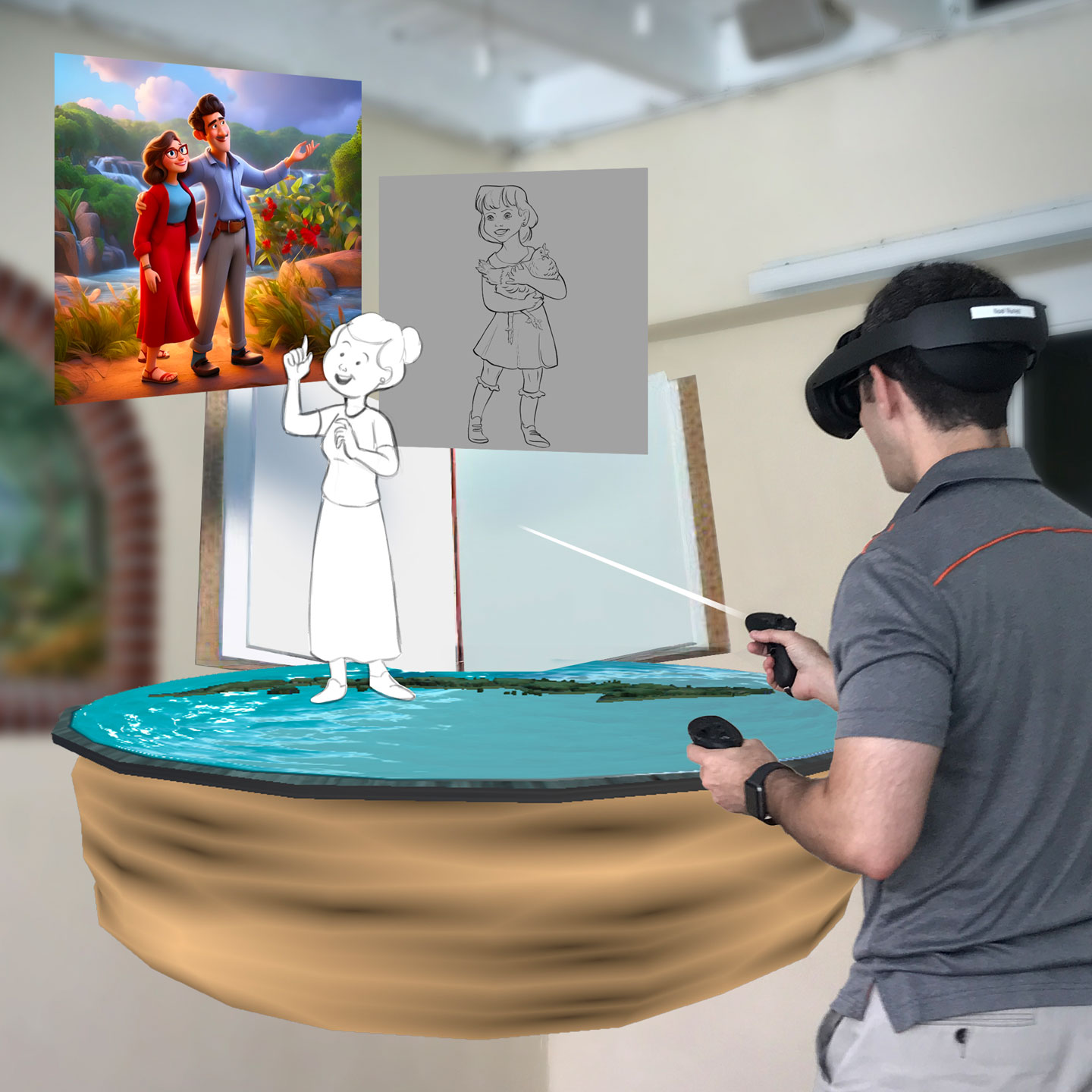
Hear the voices of those who lived through the Cuban Freedom Flights. Through a blend of animation and physical models, their stories come to life.
Design Process
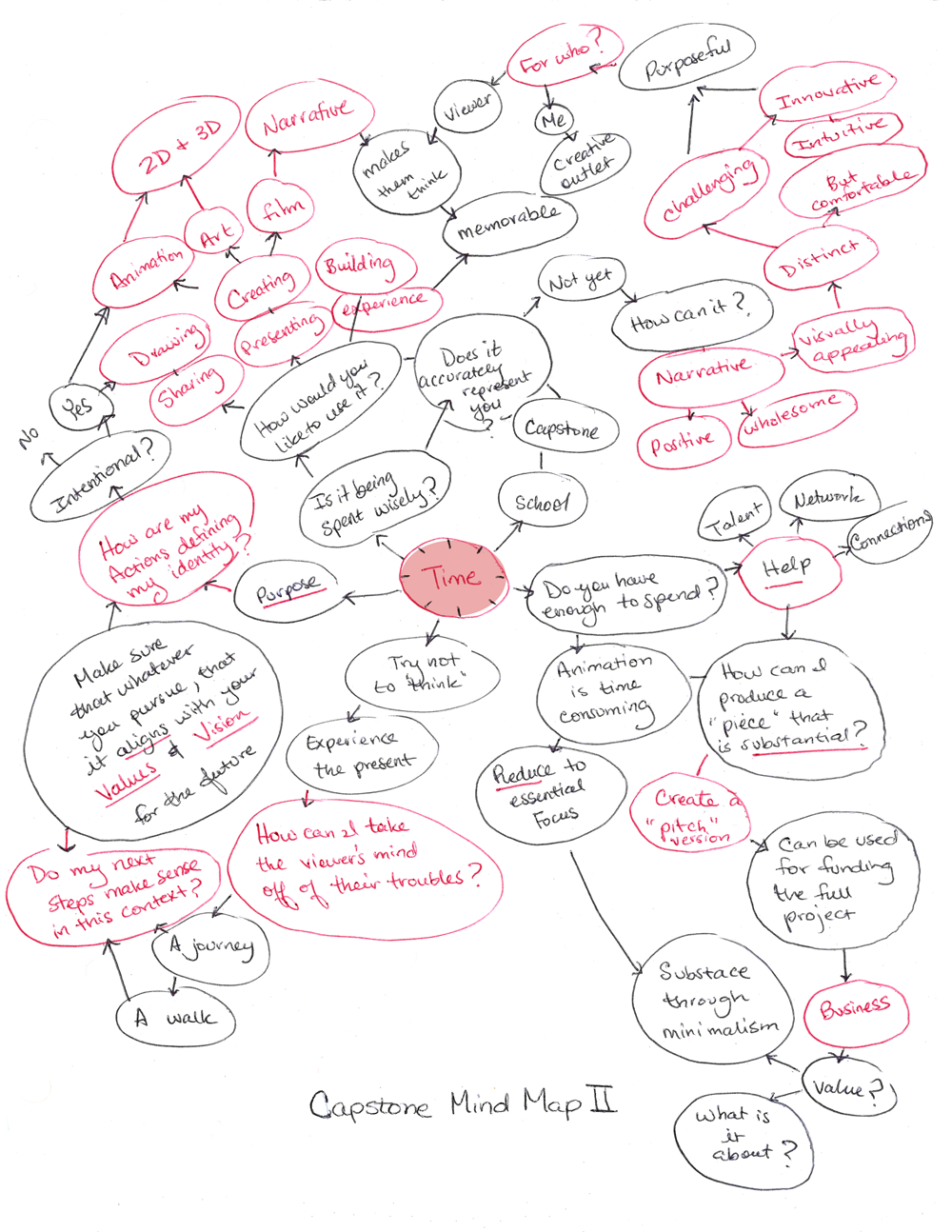
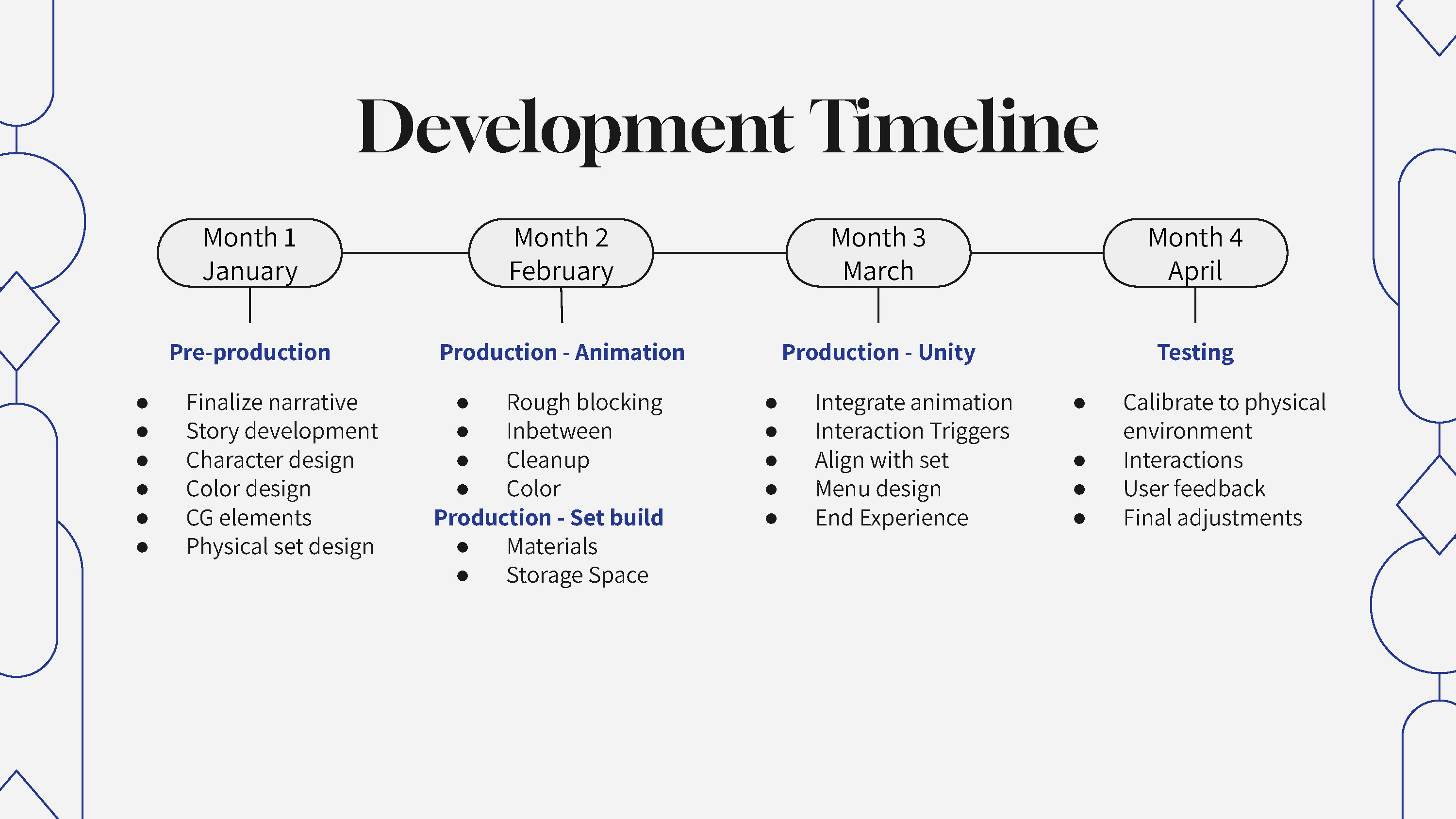
The Cuban Freedom Flights came about after a period of concept exploration and ideation, using methods such as mind-mapping and storyboarding. My concept has gone through at least six major changes. Below are some explorations including early concepts that never made it past the initial pitch phase.
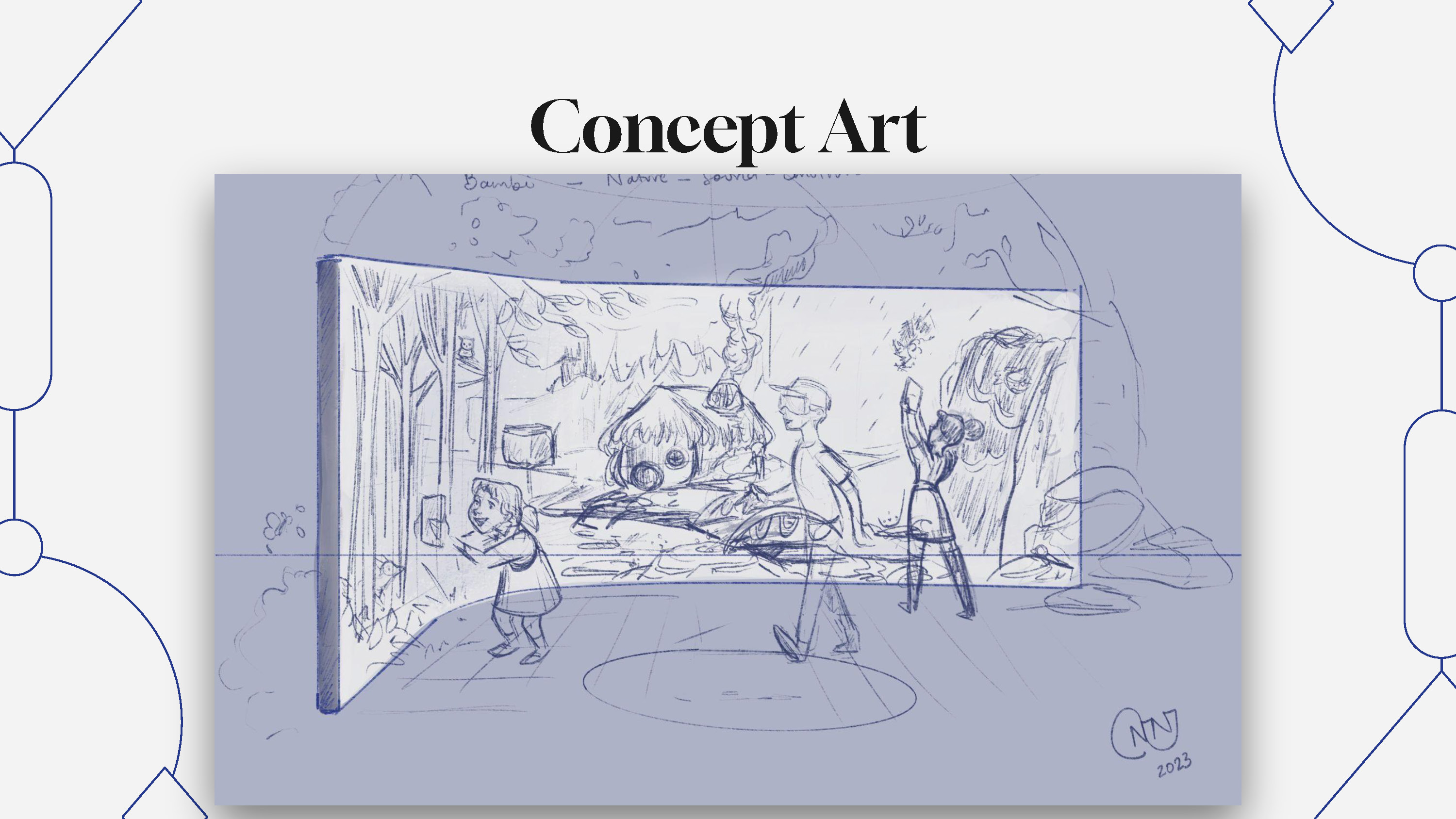
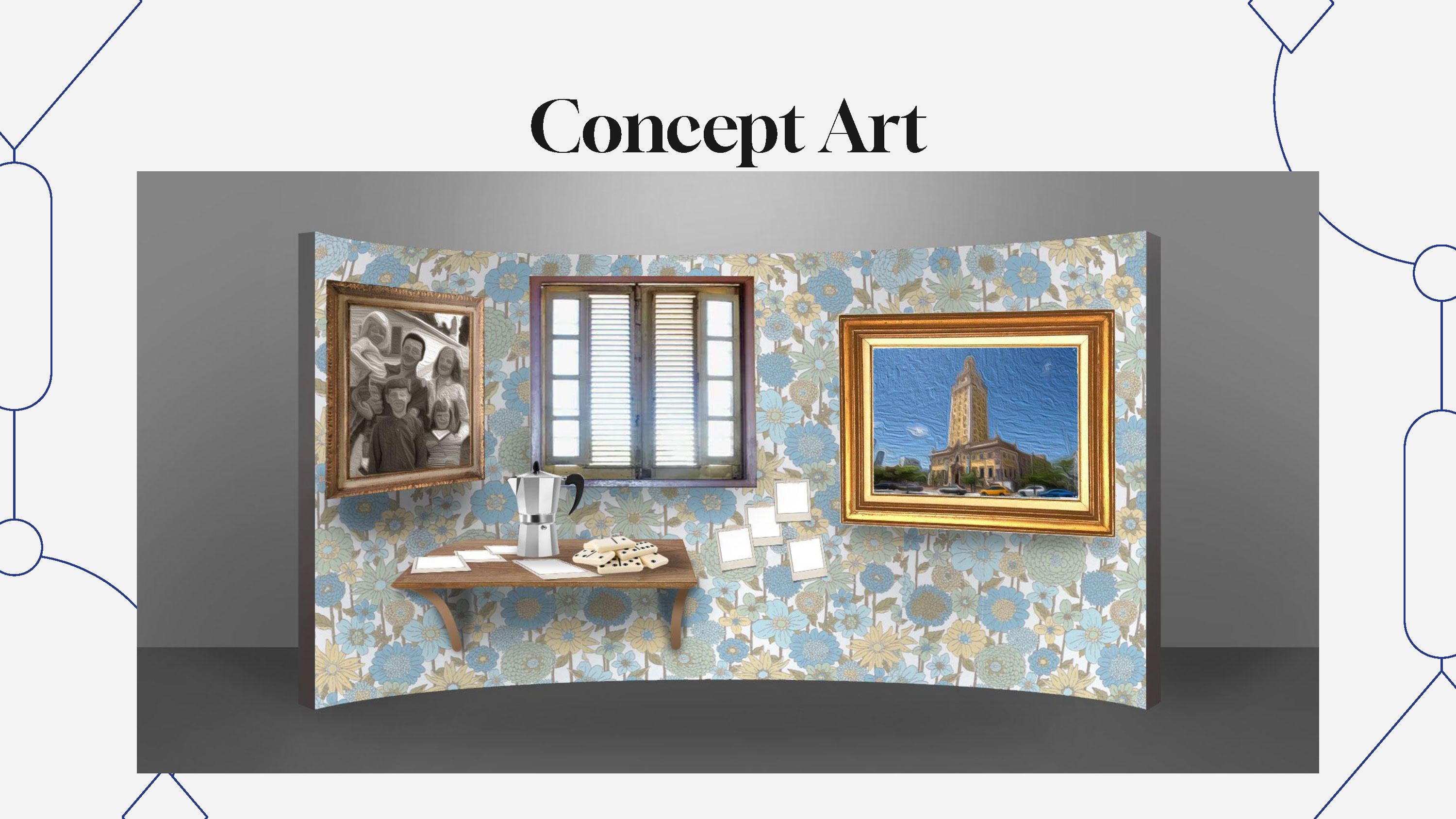
Early concepts involved incorporating physical sets with augmented overlays to tell an immersive, historical story. The slides seen below explore potential user interactions and triggers.
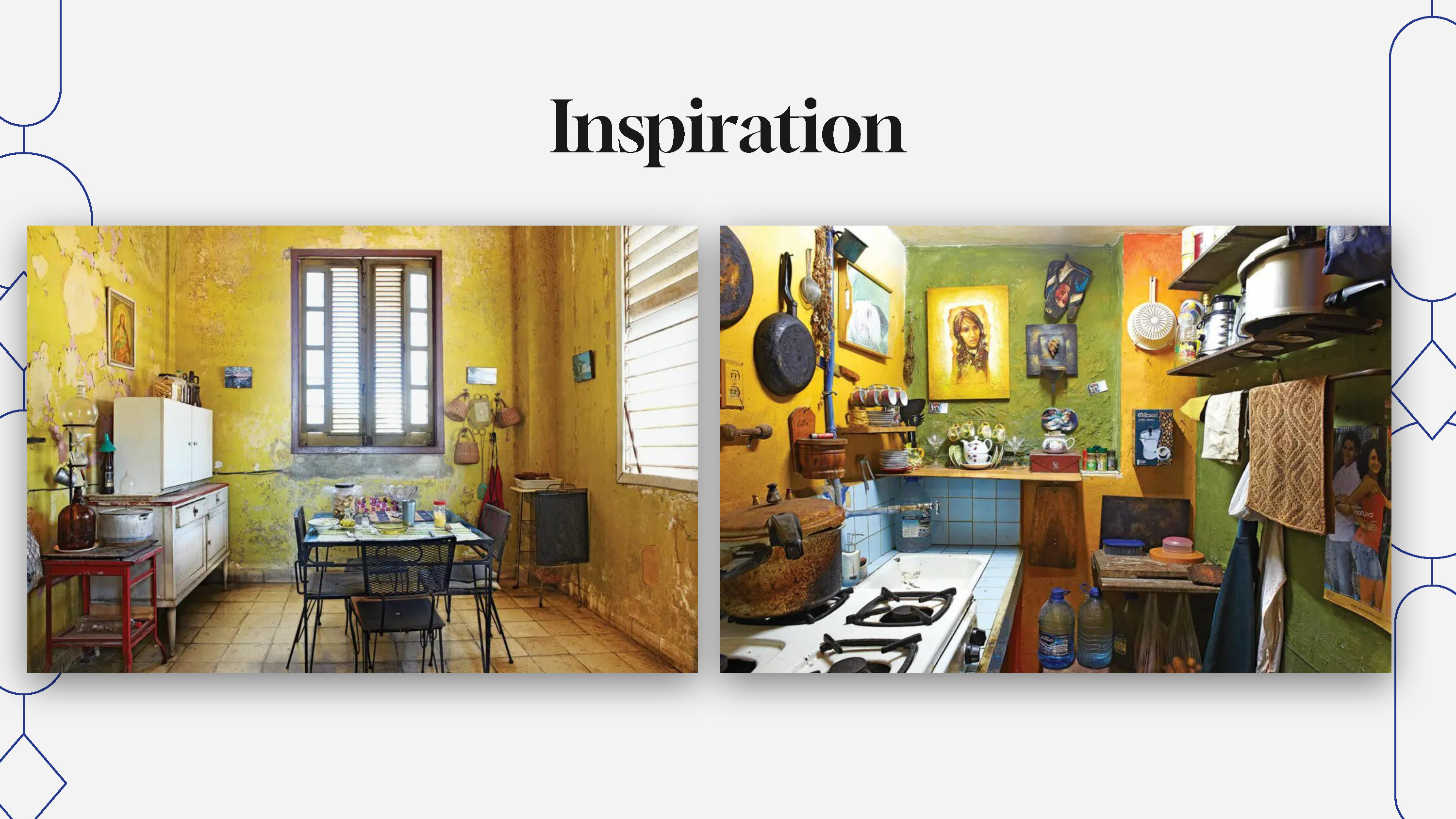
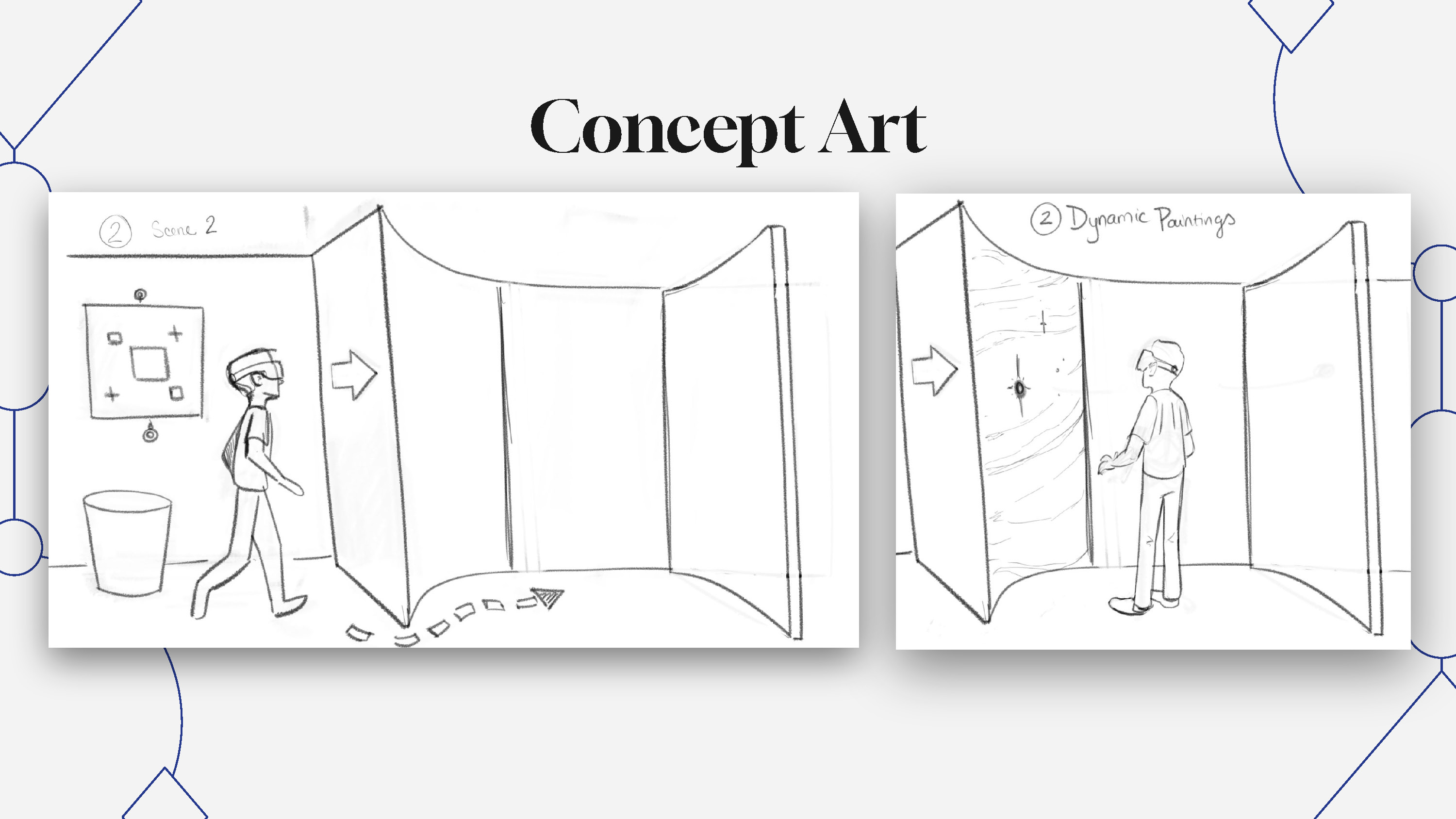
The project draws inspiration from three key precedents that balance storytelling with technology.
StoryCorps
- Short, personal stories
- Traditional animation style
- Interview-style narratives
The Book of Distance
- Interactive VR story
- Rooted in historical context
- Dramatic retelling
(305) 360°
- Passthrough technology
- Educational focus
- Diverse AR/VR interactions
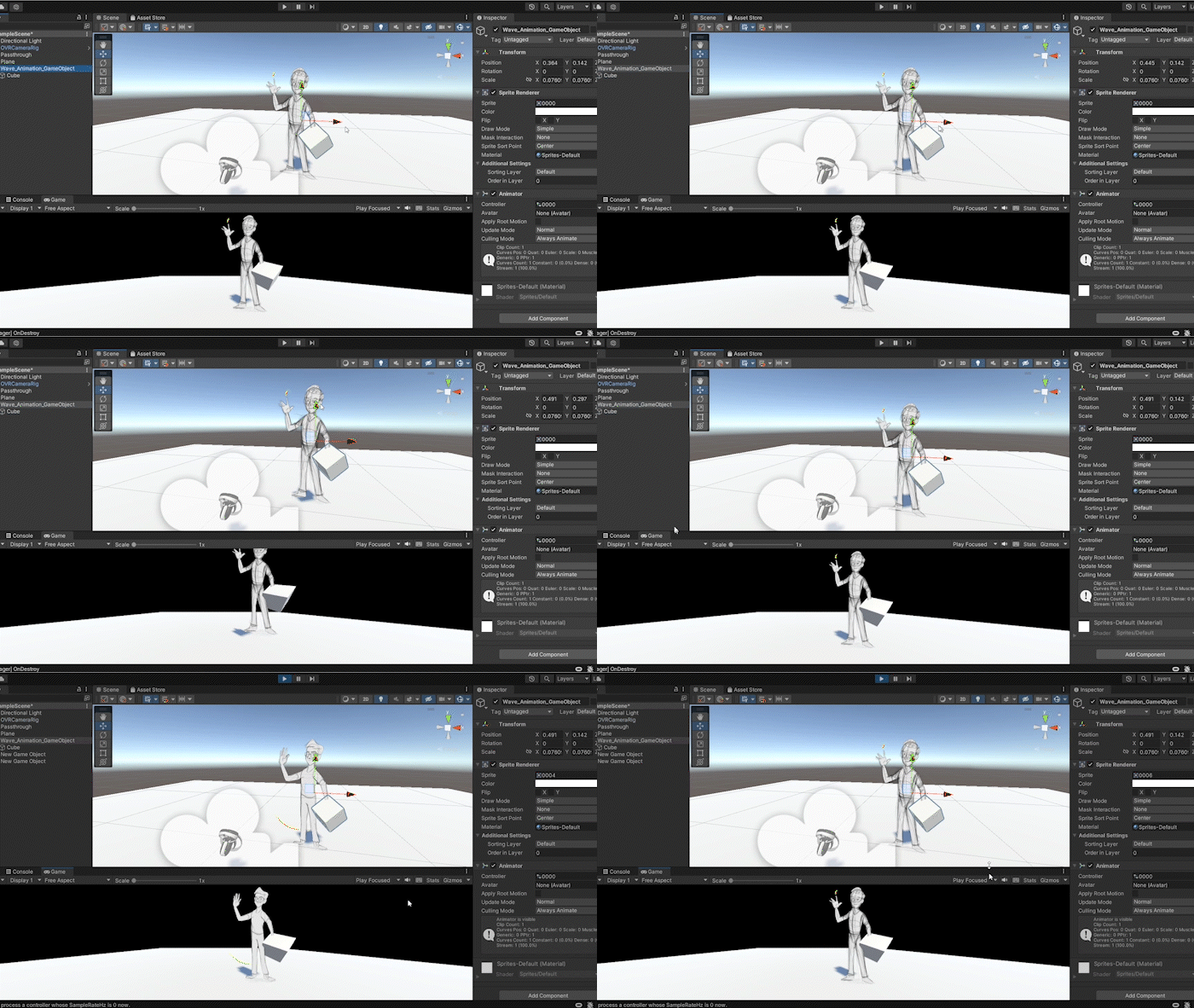
One of my goals was to incorporate hand-drawn animation in a virtual environment and to design interactions during the experience. Below are some tests conducted to see if the illusion could be pulled off.

Testing Passthrough VR
Virtual & Physical Integration
Real World Integration
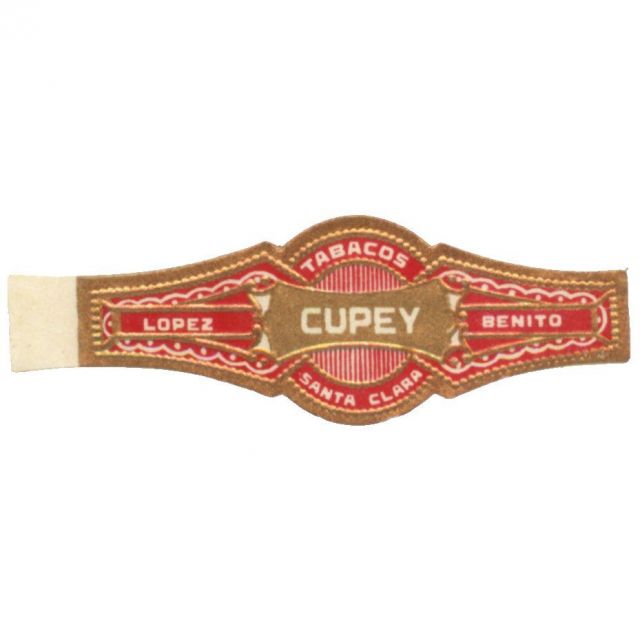
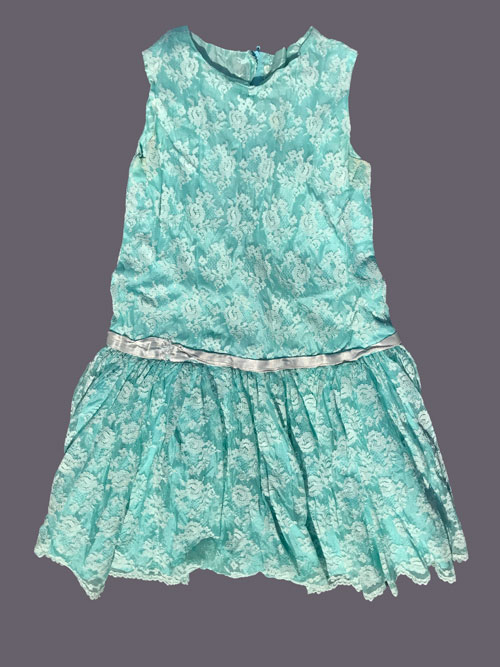
Historical Artifact Digital Cloning
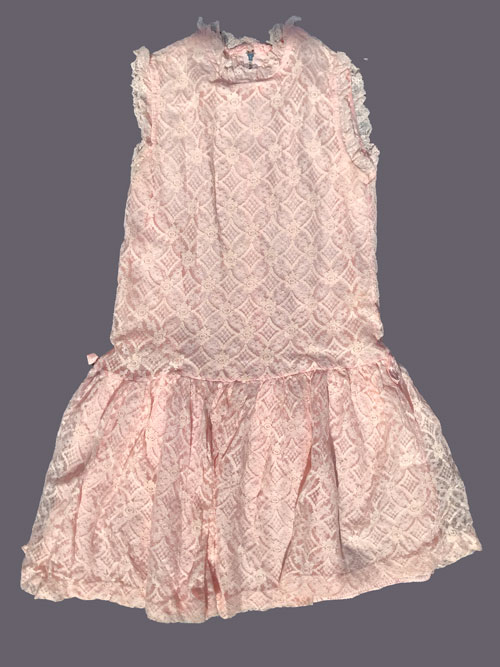
Adding Depth to Virtual Gallery
Protoyping a Virtual Play Table
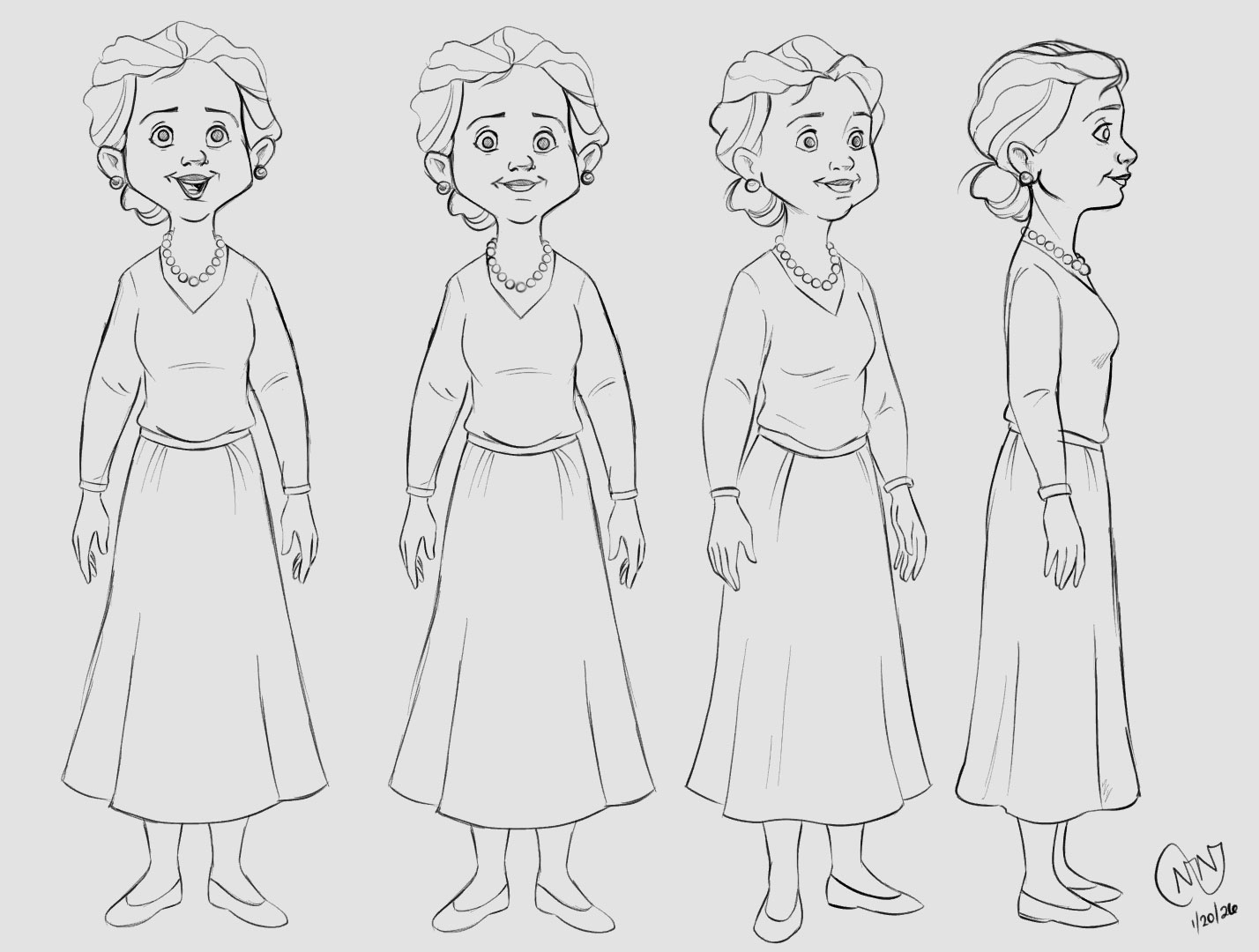
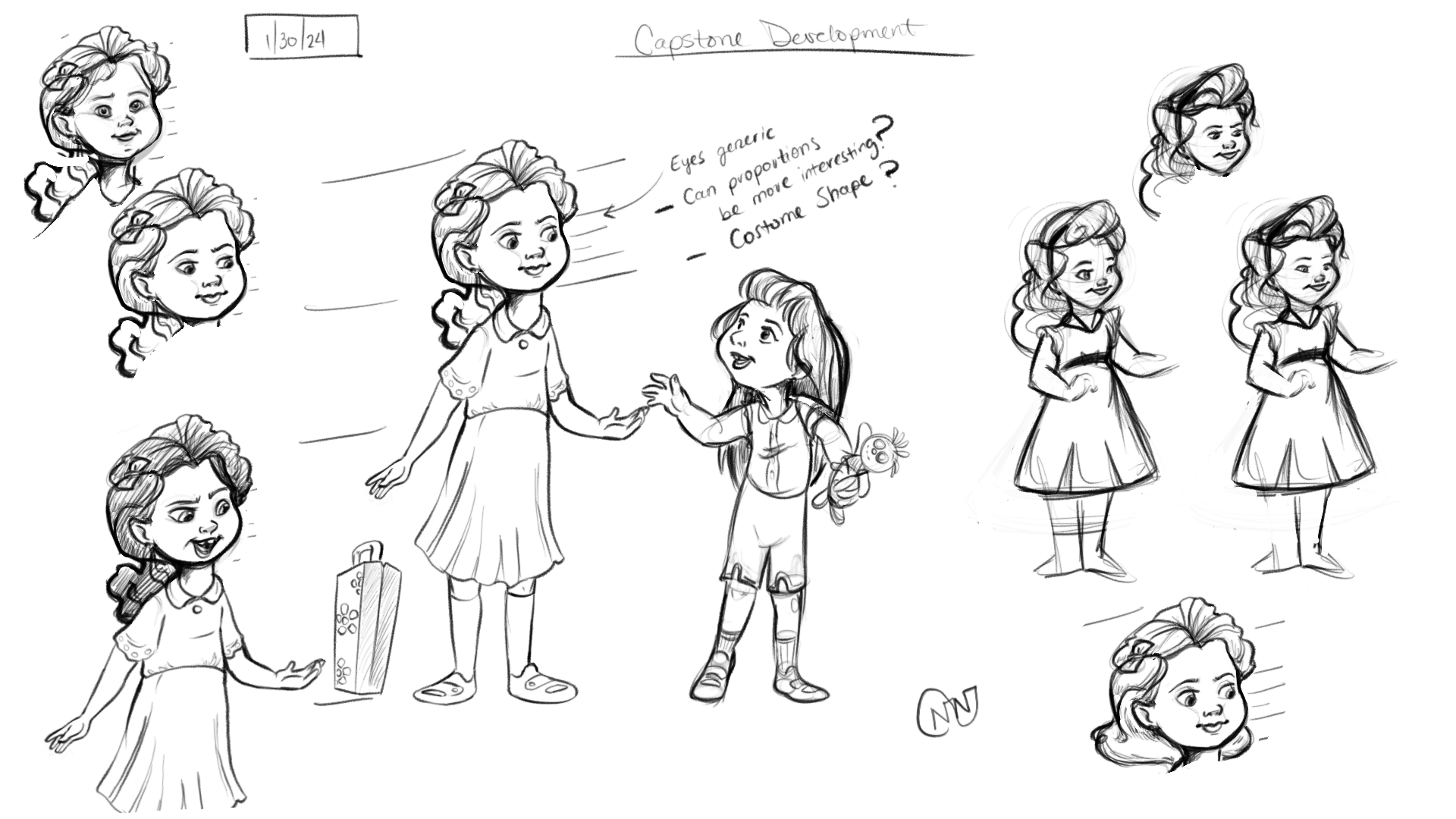
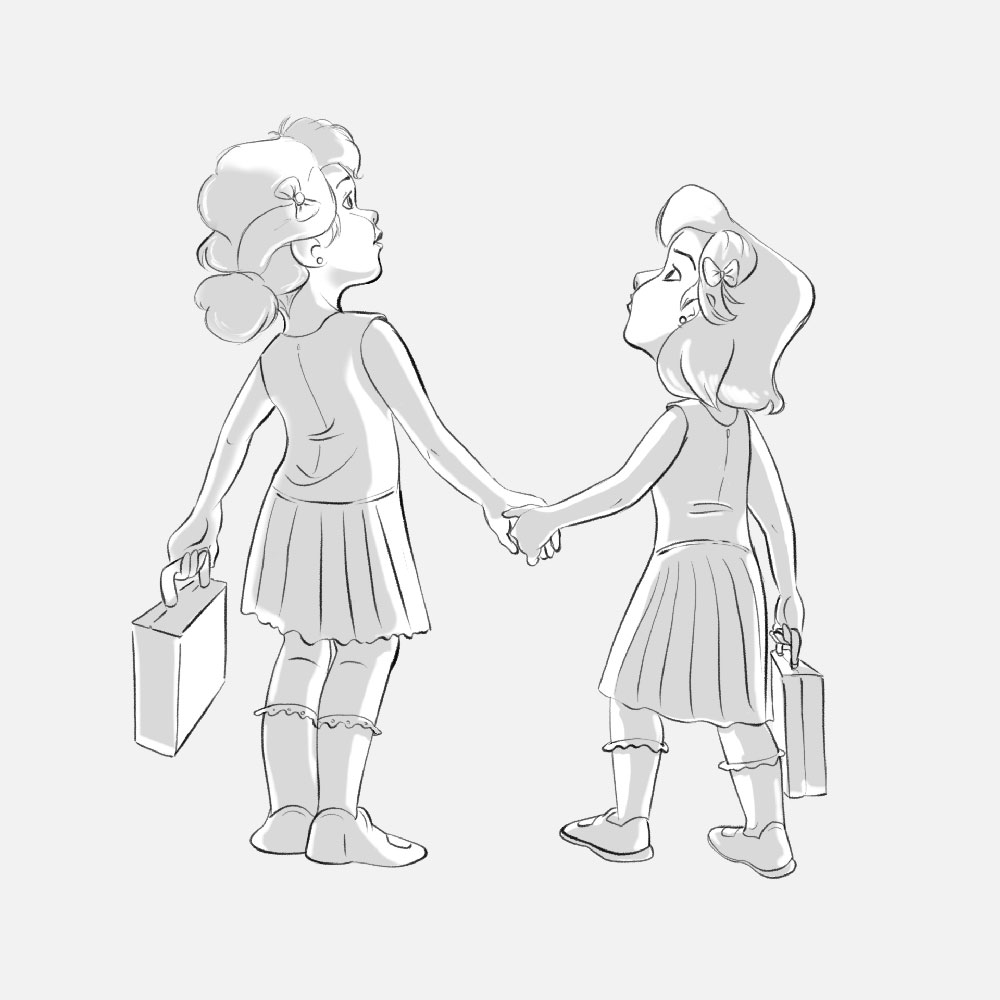
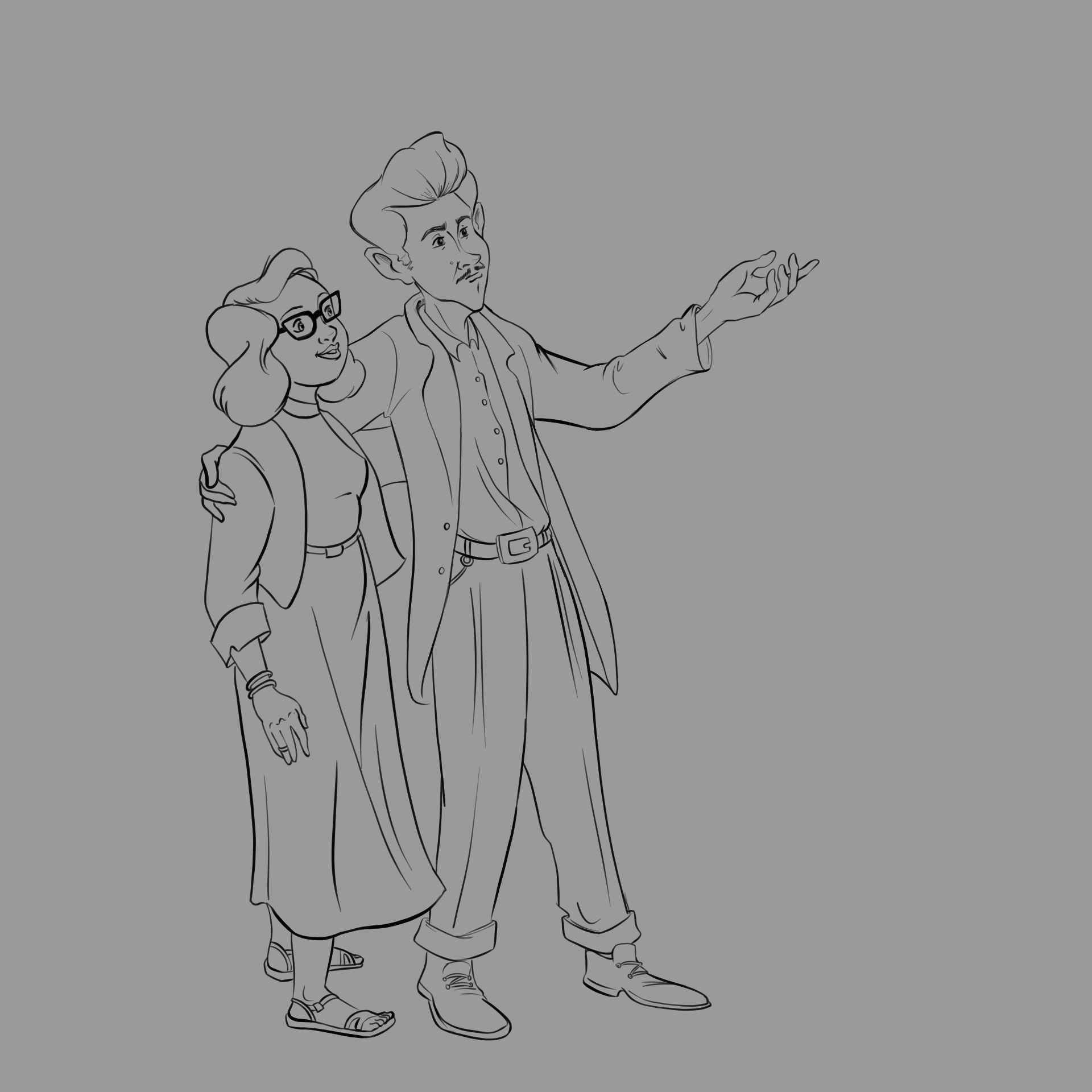
Creating the 2D Assets
User Testing & Iteration
The Feedback
"I feel like they are staring into my soul. I really like the depth of the photos."
"Oh, my abuelo would love this."
"I wish I could move the menu so I could get a full view of the photos."
"English is not my first language... Closed captioning would be great."
The Improvements
- Accessibility: Added closed captioning options for diverse users.
- Navigation: Simplified menu system with moveable/grabbable UI.
- Immersion: Added subtle environmental audio to deepen the sense of place.
Reflection
Lessons Learned
- Lock down your story before developing code.
- Collaboration is key for complex XR projects.
- Managing scope is critical to meeting deadlines.
What is Next?
- Polish artwork and storytelling elements.
- Tell more stories of the generations before us.
Created By
Noel Nuñez
Context
Capstone | Spring 2024
Tools
Unity, Maya, Adobe Creative Suite